


09 Sep How to Feel Satisfied in Life: Why Helping Others Is the Missing Key
When we search for ways to feel more satisfied with our lives, the advice usually points inward: practice self-care, set better boundaries, advance our careers, or optimize our daily habits. But psychological research and evolutionary biology tell a far richer story: you cannot be fully satisfied with your life without being of service to others, full stop.
No matter what you do for a living, whether you manage a household, lead an organization, or study global policy true life satisfaction is not a solo endeavor.
The Science of Service: Why Giving Rewires the Mind
In The Science of Happiness, psychologist Bruce Hood emphasizes that a primary driver of modern dissatisfaction and anxiety is egocentrism is an over-fixation on our internal worries, achievements, and perceived shortcomings. When we face life’s inevitable pressures, our default state is often an intense, self-focused evaluation loop.
Acts of service disrupt that loop by prompting a shift toward allocentrism is an orientation focused on others. When we step outside our own narrative to support someone else, our brain undergoes a fundamental shift:
- The “Helper’s High” & Stress Regulation: Prosocial actions trigger the release of oxytocin, dopamine, and endorphins while lowering cortisol levels. This neurochemical shift acts as an immediate circuit breaker for chronic stress.
- Cultivating Empathy and Composure: Stepping into another person’s reality builds emotional flexibility. By widening our lens, we develop perspective, which sharpens our composure when navigating personal or professional setbacks.
- Unlocking Creative Insight: We often place strict boundaries on ourselves due to self-doubt or historical rules we’ve adopted. However, when we help others, those mental barriers drop. It is frequently easier to offer creative problem-solving and see vast possibilities for someone else than it is for us. This being a cognitive skill that translates directly back into our own lives.
Physical Connection & The Calming of the Nervous System
In an increasingly digital world, much of our interaction happens behind screens. While virtual volunteering and digital communities offer valuable reach, in-person human interaction provides a distinct physiological benefit for our well-being.
This is where Dr. Stephen Porges’ Polyvagal Theory offers profound insight. Porges demonstrates that our autonomic nervous system is constantly scanning our environment for cues of safety or threat through a process called neuroception. Human nervous systems are naturally designed to co-regulate with one another.
When we share physical space with others while working toward a common goal, our ventral vagal complex responds to subtle non-verbal cues – facial expressions, gentle vocal tones, and shared presence.
By stepping into physical environments of shared service, we activate the ventral vagal pathway, which actively dampens our “fight-or-flight” sympathetic stress response. While digital communication connects our intellect, being physically present with those we serve—or those we serve alongside—restores our physiology, anchoring a deep sense of safety, calm, and grounded satisfaction.
Altruism as a Foundation for Life Satisfaction & Resilience
Resilience and life satisfaction are not static traits we either possess or lack; they are capacities built through connection, purpose, and self-efficacy.
Organizational psychologist Adam Grant explores this in Give and Take, distinguishing between selfless giving that 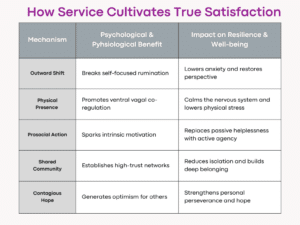 leads to burnout and “otherish” giving. Otherish givers contribute meaningfully to causes aligned with their values while maintaining healthy personal boundaries. Research shows that this form of active service fosters profound psychological safety, deep social capital, and high levels of life satisfaction.
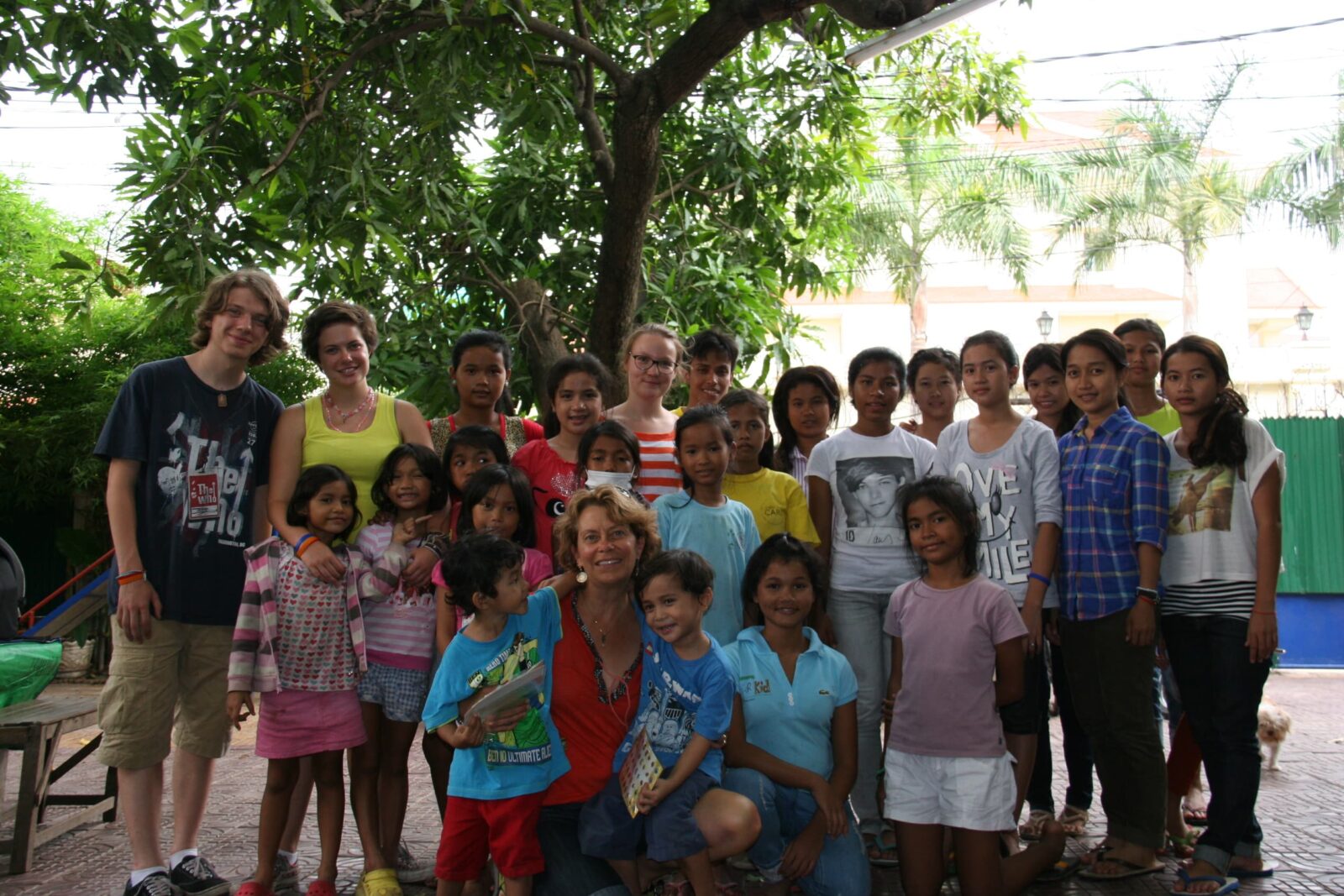
When we engage in service across different seasons of life; whether mentoring young people, supporting a grassroots humanitarian organization, offering pro-bono guidance, or facilitating heart-centered mindfulness practices like WeAddHeart, we reinforce a core psychological truth: we have agency, and our presence matters.
Ultimately, volunteering is not about vanity or self-promotion; it is a grounded, practical tool for human connection. When we help others feel valued and optimistic, we naturally anchor those exact qualities within ourselves.
Small Steps Toward Values-In-Action
Integrating service into your life does not require grand gestures or overwhelming time commitments. Genuine life satisfaction is built through small, consistent choices:
- Identify What Resonates: Choose a cause or initiative that genuinely aligns with your personal values rather than an obligation.
- Prioritize In-Person Connection: Whenever possible, choose face-to-face service opportunities to give your nervous system the physiological benefits of ventral vagal co-regulation.
- Offer Creative Perspective: Notice how natural it feels to encourage and problem-solve for others, and practice applying that same open-minded insight to your own challenges.
- Focus on Connection: Seek out small opportunities to mentor, listen, or contribute locally allowing the experience to ground you in the present moment.
Service changes communities, but just as importantly, it restores our own internal balance, helping us navigate life with greater clarity, composure, and quiet strength.
Putting Connection into Practice
If you are ready to shift from an internal evaluation loop into shared presence, I invite you to step into practice with us:
- Weekly/Monthly Practice: Join our ongoing WeAddHeart Meditation 40-minute sessions to experience the co-regulating, heart-centered power of group meditation. Each month we focus on new theme.
- Annual Event: Mark your calendar for our yearly World Values Day Sophrology-Based Meditation. This is a dedicated gathering to reconnect with what matters most in community and it occurs yearly on the third Thursday of October. Please visit the WVD website’s Valuesthon page for more details.
Balance on my friends…
Annette
No Comments